

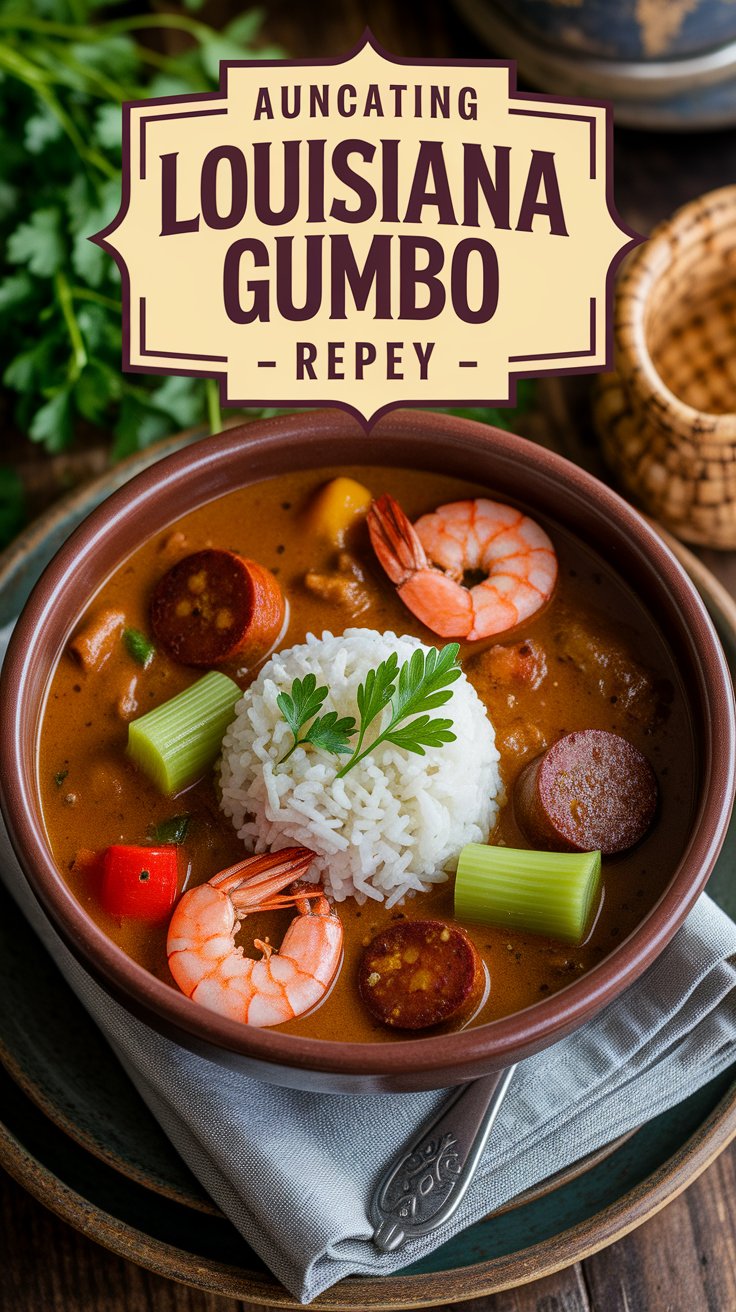
There are few dishes in the world as comforting, flavorful, and steeped in cultural history as gumbo. Originating from the heart of Louisiana, gumbo is more than just food — it’s a story told through spice, texture, and soul. This dish embodies the spirit of Southern hospitality, where every spoonful whispers tales of French, African, Spanish, and Native American roots that blended together to form Creole and Cajun cuisine.
In Louisiana, gumbo isn’t just dinner — it’s an experience. It’s a celebration that brings families to the table, uniting generations through rich, smoky aromas and deep, layered flavors. Whether it’s simmered for a weekend feast or prepared quickly on a weeknight, gumbo holds a special place in kitchens across the South.
This Authentic Louisiana Gumbo Recipe is designed for both beginners and seasoned home cooks. It breaks down the traditional process into simple, step-by-step instructions while preserving the dish’s bold authenticity. From creating the perfect roux to layering flavors of sausage, shrimp, and vegetables — this guide covers it all.
By the end, you’ll not only know how to make gumbo but why each ingredient and technique matters. Ready to bring a taste of Louisiana to your kitchen? Let’s dive in.
What Makes Louisiana Gumbo Special?
Before you even heat your pan, it’s important to understand what makes gumbo unique among Southern dishes. Unlike soups or stews, gumbo has a distinctive thick texture created by a dark roux — a slow-cooked blend of flour and oil that forms the flavorful base.
Gumbo also combines the “Holy Trinity” of Cajun cooking — onion, bell pepper, and celery. These three ingredients are the aromatic heart of countless Louisiana dishes, bringing a balanced sweetness and depth. Add to that the smoky flavor of andouille sausage, the succulence of fresh shrimp, and the bold kick of Cajun spices, and you’ve got a masterpiece in a bowl.
Some gumbo recipes are seafood-based, others feature chicken and sausage, and many blend both for a hearty mix. But one rule stays constant: the best gumbo always starts with a roux made with patience and care.
Ingredients for Authentic Louisiana Gumbo
Before you begin, make sure your ingredients are prepped and ready. Gumbo involves several layers of flavor, and timing matters.
Main Ingredients
- 1 pound andouille sausage, sliced
Provides a smoky, spicy backbone to the gumbo. - 1 pound shrimp, peeled and deveined
Fresh or frozen works — this adds sweetness and texture. - ½ cup vegetable oil
Used to make the roux; gives the base a smooth richness. - ½ cup all-purpose flour
Thickens the gumbo and creates the signature nutty flavor. - 1 large onion, chopped
Part of the Cajun “holy trinity.” - 1 bell pepper, chopped
Green is traditional, but any color adds freshness. - 2 celery stalks, chopped
Completes the aromatic foundation. - 6 cups chicken broth (low-sodium preferred)
Balances flavors without overwhelming salt. - 3 cloves garlic, minced
Fresh garlic enhances the savory aroma. - 2 bay leaves
Adds a subtle herbal fragrance. - 2 tablespoons Cajun seasoning
Adjust to your spice preference. - Salt and black pepper to taste
- Cooked white rice (for serving)
- Chopped green onions and parsley (for garnish)
Step-by-Step: How to Make Louisiana Gumbo
Making gumbo is about building flavor slowly — each stage adds depth. Don’t rush it.
Step 1: Make the Roux (The Soul of Gumbo)
- In a large, heavy-bottomed pot or Dutch oven, heat ½ cup of vegetable oil over medium heat.
- Slowly sprinkle in ½ cup of flour, stirring constantly with a wooden spoon.
- Continue stirring for 20–30 minutes until the mixture turns a deep chocolate-brown color.
- Be patient — the darker the roux, the richer the flavor.
- Don’t walk away, as it can burn quickly near the end.
👉 Chef’s Tip: If your roux smells slightly nutty and looks like melted chocolate, it’s perfect.
Step 2: Add the Holy Trinity
- Stir in the onion, bell pepper, and celery.
- Cook for about 5 minutes, until the vegetables soften and absorb the roux.
- Add garlic, bay leaves, salt, pepper, and Cajun seasoning.
- Stir for another 2 minutes to release the spices’ aroma.
This step transforms your roux into a thick, fragrant base that’s full of character.
Step 3: Add the Sausage and Broth
- Add sliced andouille sausage and cook for 5 minutes to let the edges brown.
- Slowly pour in 6 cups of chicken broth, stirring constantly to prevent lumps.
- Bring to a gentle boil, then reduce the heat and simmer for 30 minutes, stirring occasionally.
During this stage, the flavors meld beautifully — the broth deepens, the spices mellow, and your kitchen will start to smell irresistible.
Step 4: Add the Shrimp
- Add shrimp to the simmering gumbo and cook for about 8–10 minutes, or until the shrimp are opaque and tender.
- Remove the bay leaves before serving.
Step 5: Serve and Garnish
- Spoon hot gumbo over a bowl of cooked rice.
- Garnish with chopped parsley and green onions for color and freshness.
- Serve with a side of cornbread or crusty French bread to soak up the sauce.
Expert Tips for Perfect Louisiana Gumbo
- The Roux is Everything: Take your time. A dark roux gives gumbo its signature depth.
- Use Fresh Seafood: Fresh shrimp adds sweetness and texture; frozen works if thawed properly.
- Don’t Skimp on the Trinity: The onion, pepper, and celery form the aromatic backbone.
- Rest Before Serving: Let the gumbo sit for 10–15 minutes before eating — it allows the flavors to deepen.
- Reheat with Care: When reheating, do it slowly on low heat to preserve the texture.
Serving Ideas: What Goes Best with Gumbo
Gumbo shines when paired with the right sides and drinks. Here are some pairings that elevate your meal:
- Cornbread: A soft, slightly sweet side that balances the spice.
- Cajun Potato Salad: Served cold, it cools the palate.
- Crusty French Bread: Perfect for soaking up every drop of the rich sauce.
- White Wine or Light Beer: Complements the smoky, spicy flavors beautifully.
- Lemon Wedges: Add brightness to balance the richness.
Storage & Leftover Tips
Gumbo is famous for tasting even better the next day. Here’s how to store it properly:
- Refrigerator: Keep in an airtight container for up to 3 days.
- Freezer: Store for up to 3 months. Thaw in the fridge overnight before reheating.
- Reheating: Heat gently on the stove, adding a splash of water if it thickens too much.
Nutrition Information (Per Serving)
- Calories: 450 kcal
- Protein: 30 g
- Carbohydrates: 35 g
- Fat: 15 g
- Fiber: 4 g
- Sodium: 800 mg
Tip: For a low-carb version, skip the rice and serve gumbo with cauliflower rice instead.
Frequently Asked Questions (FAQs)
1. Can I make gumbo ahead of time?
Absolutely! Gumbo develops deeper flavors when made in advance. Store it in the fridge overnight, and reheat before serving.
2. What’s the difference between Cajun and Creole gumbo?
Cajun gumbo typically has no tomatoes and uses a dark roux, while Creole gumbo often includes tomatoes and sometimes seafood like crab or oysters.
3. Can I make this gumbo without seafood?
Yes — replace shrimp with chicken thighs or drumsticks for a hearty, meat-only version.
4. What if my roux burns?
If the roux turns black or smells burnt, discard it and start over. A burnt roux can ruin the gumbo’s flavor.
5. Can I make gumbo gluten-free?
Yes, simply replace all-purpose flour with almond or rice flour when making the roux.
6. Can I make gumbo in a slow cooker?
You can! Make the roux on the stove first, then transfer everything to a slow cooker and simmer on low for 6 hours.
A Little History: The Origins of Gumbo
Gumbo’s roots stretch back over 300 years, reflecting Louisiana’s cultural melting pot. The word “gumbo” comes from the West African word “kingombo,” meaning okra — one of the earliest thickeners used in the dish.
French settlers brought the concept of roux, while Native Americans introduced filé powder (made from sassafras leaves). Over time, these influences blended to create the dish we now know as gumbo — a true symbol of Louisiana’s diversity and resilience.
Each region in Louisiana has its twist:
- New Orleans gumbo often features seafood and a red roux.
- Acadiana gumbo (Cajun style) leans on smoky sausage and dark roux.
- Rural gumbo may include wild game like duck or rabbit.
No matter the variation, gumbo remains a dish of community, comfort, and history.
Troubleshooting Common Gumbo Mistakes
| Problem | Likely Cause | Fix |
|---|---|---|
| Gumbo too thin | Didn’t cook long enough or roux too light | Simmer longer or thicken with more roux |
| Roux burnt | Heat too high or left unattended | Start over — once burnt, it can’t be saved |
| Too spicy | Too much Cajun seasoning | Add a splash of cream or serve with plain rice |
| Too salty | Used salted broth or sausage | Add unsalted broth or a diced potato to absorb salt |
| Seafood overcooked | Cooked shrimp too long | Add seafood at the very end, just until opaque |
Pro Variations of Louisiana Gumbo
- Chicken and Sausage Gumbo:
Replace shrimp with chicken thighs for a comforting, rustic flavor. - Seafood Gumbo Deluxe:
Add crabmeat, oysters, and crawfish for a seafood feast. - Vegetarian Gumbo:
Use vegetable broth, okra, mushrooms, and beans. - Spicy Gumbo:
Add hot sauce or cayenne pepper for extra heat. - Smoky Bacon Gumbo:
Render bacon first, then use its fat to make the roux.
Serving Louisiana Gumbo at Gatherings
Gumbo isn’t just food — it’s an event. Whether for Mardi Gras, family reunions, or cozy winter nights, it brings everyone together.
When serving a crowd:
- Offer a gumbo bar — let guests choose from shrimp, sausage, chicken, or vegetarian options.
- Keep extra rice warm in a rice cooker.
- Serve with sides of cornbread, coleslaw, or potato salad.
- Garnish bowls with fresh herbs and lemon slices for a restaurant-worthy touch.
The Secret to an Unforgettable Gumbo
Ask any Louisiana cook, and they’ll tell you: the secret is love and patience.
It’s not just about following the recipe — it’s about taking time to stir the roux, tasting as you go, and letting the flavors come together slowly.
Gumbo rewards patience. The more care you put in, the richer it becomes. And when you finally sit down to eat, surrounded by family or friends, every bite tells the story of tradition, creativity, and comfort.
Conclusion: A Taste of the Bayou in Every Bite
This Authentic Louisiana Gumbo Recipe brings the warmth of the South right to your kitchen. From the deep, rich roux to the flavorful sausage and shrimp, each element adds to a dish that’s as soulful as it is satisfying.