

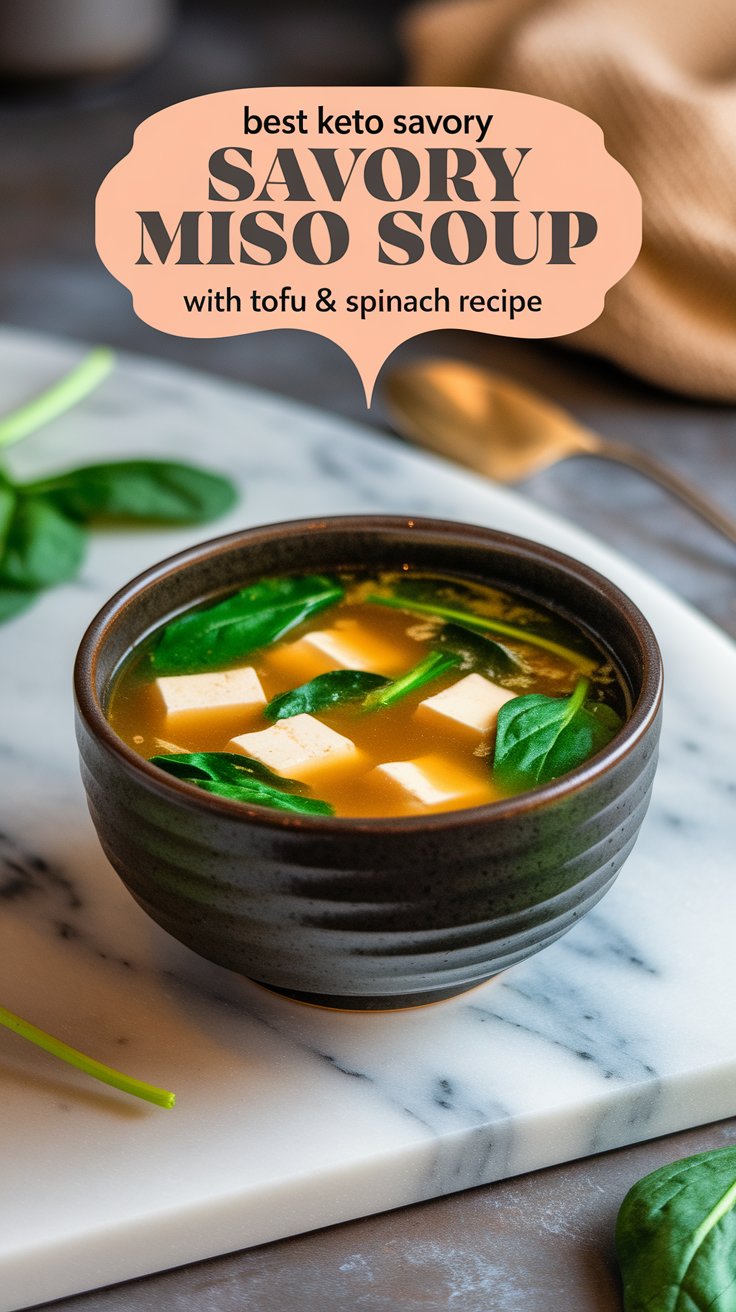
If you’re searching for a warm, comforting, and flavorful dish that fits beautifully into a keto or low-carb lifestyle, then this Keto Savory Miso Soup with Tofu & Spinach is the perfect bowl of bliss for your table. Combining the essence of traditional Japanese cooking with the principles of low-carb eating, this soup delivers extraordinary taste while keeping your nutrition goals intact.
Whether you’re a seasoned home cook or a beginner exploring healthy recipes, this guide offers everything you need—from the origins of miso soup, detailed step-by-step instructions, expert cooking techniques, ingredient substitutions, helpful serving ideas, storage methods, and more. By the end of this article, you’ll not only master this recipe—you’ll understand the deeper culinary science behind creating the perfect miso soup at home.
Let’s dive into an enriching culinary journey that blends health, tradition, and flavor in every spoonful.
⭐ What Makes This Keto Miso Soup Truly Special?
Miso soup is more than a comfort dish—it’s nourishment, warmth, and simplicity in one bowl. This keto-friendly version upgrades the traditional recipe without sacrificing authenticity, thanks to:
✅ Low-carb ingredients
No noodles, rice, or carb-heavy additives. Perfect for keto followers.
✅ High protein from tofu
Keeps you full while supporting muscle and metabolic function.
✅ Nutrient-rich spinach
Low in carbs but high in vitamins (A, C, K), magnesium, folate, and iron.
✅ Gut-friendly miso paste
Fermented miso offers probiotics that support digestion and immunity.
✅ Quick cooking time
Ready in less than 25 minutes, ideal for busy individuals.
✅ Simple ingredients
Easy to find, affordable, and versatile.
This soup is proof that clean eating doesn’t have to be boring—you can enjoy bold flavors while supporting your wellness journey.
🌿 Understanding Miso Soup: A Quick Culinary Background
Before jumping into the recipe, let’s explore what miso soup truly represents.
1. Traditional Japanese Roots
Miso soup (味噌汁, misoshiru) is a beloved part of Japanese dining culture, served during breakfast, lunch, and dinner. It typically contains:
- Dashi broth
- Miso paste
- Tofu
- Seaweed
- Green onions
Our recipe respects the flavor profile but adapts the ingredients to support a keto-compliant approach.
2. The Importance of Miso Paste
Miso paste is fermented soybeans mixed with salt and koji. There are several varieties:
White Miso (Shiro Miso)
- Light flavor
- Mild sweetness
- Best for soups and dressings
- Perfect for beginners
Yellow Miso (Shinshu Miso)
- Balanced flavor
- Slightly stronger
Red Miso (Aka Miso)
- Deep, robust, salty
- Best for hearty soups
For this keto recipe, white miso delivers the perfect delicate and savory broth.
3. How Keto Works With Miso Soup
Traditional miso soup is already low in carbs, but some variations include:
- Noodles
- Root vegetables
- Taro
- Sweeteners
We remove carb-heavy additions and replace them with protein and nutrient-dense greens, making the soup keto-approved without losing authenticity.
🍲 Ingredients for Keto Savory Miso Soup with Tofu & Spinach
Here is the clean, simple, and keto-friendly ingredient list:
- 4 cups vegetable broth
- 3 tablespoons white miso paste
- 1 cup firm tofu, diced
- 2 cups fresh spinach
- 1 tablespoon sesame oil
- 2 green onions, chopped
- Salt & pepper (optional)
- 1 teaspoon freshly grated ginger (optional)
🔎 Ingredient Breakdown & Why They Matter
• Vegetable Broth
Acts as the base, creating a rich, savory foundation.
• Miso Paste
Adds depth, umami, and gut-friendly probiotics.
• Firm Tofu
Excellent source of plant-based protein with a neutral flavor.
• Spinach
Supports keto nutrition with minimal carbs and maximum vitamins.
• Sesame Oil
Boosts aroma and adds healthy fats—fantastic for keto diets.
• Ginger (Optional)
Adds a refreshing and slightly spicy note that elevates the soup.
🧑🍳 How to Make the Best Keto Savory Miso Soup – Step-by-Step
Follow these simple steps to create an unforgettable bowl of miso soup.
Step 1: Warm the Broth
In a large pot, heat the vegetable broth over medium heat until it gently simmers. Avoid boiling—boiling reduces the delicacy of the miso flavor.
💡 Chef’s Tip:
Simmering, not boiling, helps preserve the subtle taste layers of miso.
Step 2: Dissolve the Miso Paste
Transfer a ladle of warm broth into a small bowl. Add miso paste and whisk until smooth, then pour it back into the pot.
💡 Why This Step Matters
Directly adding miso to boiling broth can kill its nutrients and damage flavor. Mixing separately maintains authenticity.
Step 3: Add the Tofu Gently
Lower the heat and add diced tofu. Stir slowly to avoid breakage.
💡 Expert Tip
Silken tofu works too, but handle with extra care.
Step 4: Add Ginger (Optional)
If desired, add grated ginger and let it simmer for 5 minutes. This enhances the aroma and adds warmth.
Step 5: Wilt the Spinach
Add spinach and stir gently until wilted (about 2 minutes).
Step 6: Add Sesame Oil
Drizzle sesame oil over the soup for a beautiful nutty aroma.
Step 7: Season & Serve
Taste the soup. Add salt and pepper only if needed (miso is naturally salty). Serve hot with freshly chopped green onions.
🌟 Flavor Variations You Can Try
This recipe is flexible! Build your own variations:
1. Add Mushrooms
Shiitake or enoki mushrooms bring earthy richness.
2. Add Seaweed
A small amount of wakame enhances authenticity.
3. Add Chili Flakes
For a spicy version without increasing carbs.
4. Add Zucchini Noodles
Create “keto ramen”-style soup.
5. Lemon-Ginger Boost
Add lemon zest and more ginger for freshness.
🥗 Best Ways to Serve This Keto Miso Soup
Pair your soup with:
- Cucumber sushi rolls
- Keto sesame chicken
- Lettuce-wrapped tuna
- Low-carb seaweed salad
The pairing enhances the Japanese-inspired dining experience.
💪 Nutritional Breakdown (Per Serving)
Approximate values:
- Calories: 150–180
- Carbs: 7–10g
- Protein: 12–14g
- Fat: 9–12g
- Fiber: 2g
Low carb, high protein, and healthy fats—perfect for keto.
🧊 How to Store & Reheat Leftovers
Refrigeration
Store in an airtight container for up to 3 days.
Freezing
You can freeze it, but exclude tofu and spinach. Add them fresh when reheating.
Reheating
Warm gently on low heat; avoid boiling.
❓ FAQs – Keto Miso Soup Edition
1. Can I freeze miso soup?
Yes, but freeze only the broth. Add tofu and spinach later.
2. Is miso keto-friendly?
Yes! Miso contains minimal carbs and offers probiotics.
3. What can I use instead of tofu?
Mushrooms, shredded chicken, or egg drop.
4. Can I make it spicy?
Add chili oil, flakes, or sliced jalapeños.
5. Is miso soup good for weight loss?
It’s low calorie, filling, and nutrient-dense—great for weight management.
6. Can I use chicken broth instead?
Absolutely. It adds richness and maintains keto compliance.
🍜 Expert Tips to Elevate Your Miso Soup
1. Don’t boil the miso
It ruins flavor and kills probiotics.
2. Use high-quality tofu
It absorbs flavor better and maintains shape.
3. Add greens at the end
Prevents overcooking and maintains nutrients.
4. Taste before seasoning
Miso is already salty.
5. Add textures
Crunchy toppings like sesame seeds elevate it.
🧠 The Cooking Science Behind Miso Soup
Understanding the science helps you cook better:
Umami Chemistry
Miso contains glutamic acid—responsible for deep savory flavor.
Fermentation Benefits
Probiotics stay alive when miso isn’t boiled.
Spinach Wilt Chemistry
Spinach breaks down fast due to high water content—adding it last keeps color and nutrients.
Tofu’s Sponge Effect
Tofu absorbs miso broth, enhancing taste.
🌟 Final Thoughts: Why This Keto Miso Soup Belongs in Your Weekly Meal Plan
This Keto Savory Miso Soup with Tofu & Spinach is more than a recipe—it’s a nourishing, flavorful dish that supports your wellness goals while offering comfort and simplicity. With minimal preparation, budget-friendly ingredients, and incredible versatility, it’s the perfect choice for lunches, dinners, meal prep, or cozy evenings at home.
Every spoonful delivers warmth, richness, and a boost of nutrition. Whether you’re eating keto, low-carb, vegetarian, or simply enjoying delicious soup, this recipe fits seamlessly into your lifestyle.