

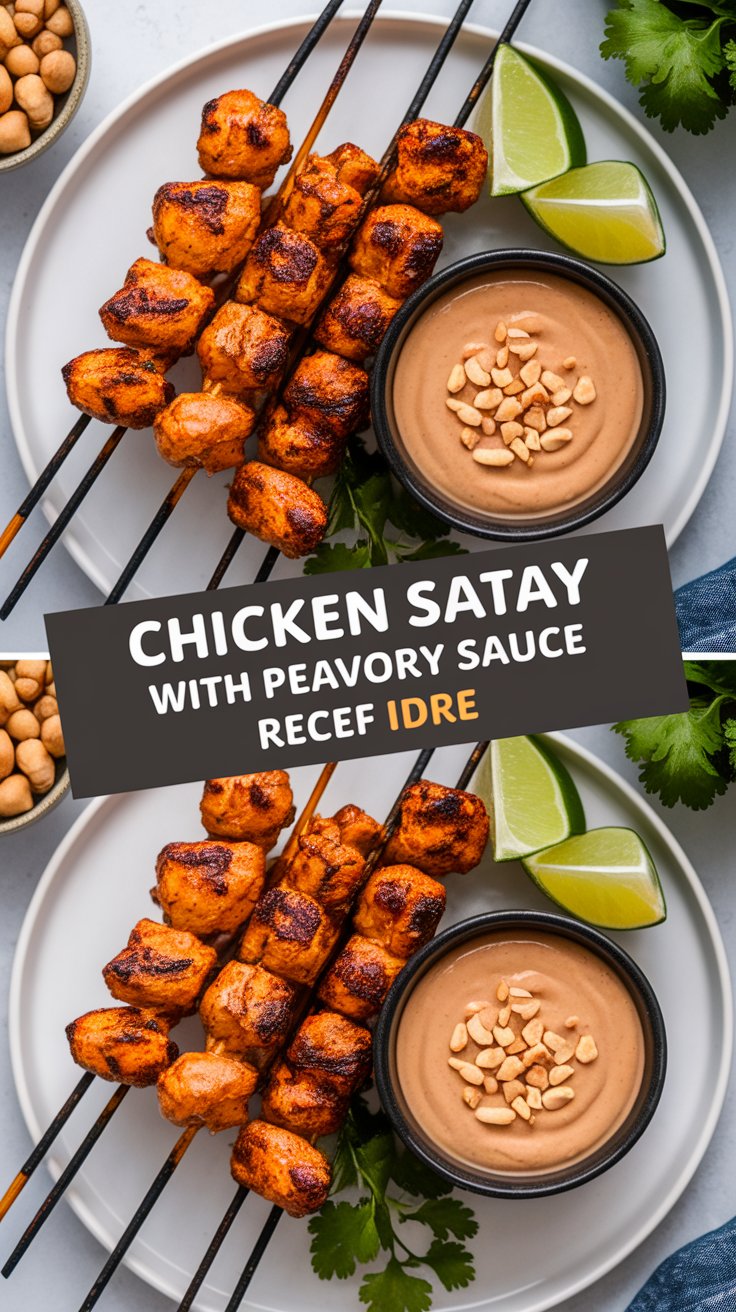
If you’re searching for a dish that’s tender, smoky, aromatic, and paired with a creamy sauce bursting with nutty, tangy flavors—Chicken Satay is the answer. Originating from Southeast Asian street-food culture, especially Indonesia, Malaysia, and Thailand, satay has become a global favorite for its irresistible balance of charred meat, rich spices, and a silky peanut dipping sauce. This recipe brings restaurant-quality satay right into your kitchen, without complicated ingredients or techniques.
Whether you’re hosting a weekend gathering, meal prepping for the week, or simply craving a flavorful weeknight dinner, this step-by-step guide will help you create juicy, perfectly grilled skewers every time. Made with a savory marinade of coconut milk, garlic, ginger, spices, and lime, each bite carries bold flavors while still being light, nutritious, and satisfying.
What Makes This Chicken Satay Recipe Special?
There are many versions of satay, but this recipe stands out because:
- The marinade focuses on tenderness, not just flavor—coconut milk and acidic ingredients help break down the fibers.
- Balanced flavor profile—sweetness, spice, creaminess, umami, and citrus all work together.
- No overly processed ingredients—fresh garlic, ginger, real lime juice, and natural peanut butter.
- Adaptable to diets—can be gluten-free, dairy-free, keto, low-carb, or refined-sugar-free.
- Grill, oven, air fryer, or stovetop options—perfect year-round cooking.
It’s comforting yet exciting, familiar yet exotic—exactly what a great global recipe should deliver.
Ingredients You’ll Need
Below is a complete breakdown of everything required for the marinade, sauce, and grilling. The ingredients are everyday pantry staples yet deliver rich, layered taste.
For the Chicken
- 1 pound boneless chicken breast or thighs, cut into long strips
- 1 tablespoon soy sauce (use tamari for gluten-free)
- 1 tablespoon sesame oil
- 1 teaspoon fresh garlic, minced
- 1 teaspoon fresh ginger, minced
- 1 tablespoon brown sugar or honey
- 1/4 cup coconut milk
- 1 teaspoon turmeric powder (optional but adds amazing color)
- 1/2 teaspoon paprika
- 1/2 teaspoon ground coriander
- Wooden skewers, soaked in water
For the Peanut Sauce
- 1/4 cup creamy peanut butter
- 1/4 cup coconut milk
- 2 tablespoons lime juice or rice vinegar
- 1 tablespoon soy sauce or fish sauce
- 1 teaspoon honey or maple syrup
- 1 clove garlic, minced
- Water to adjust consistency if needed
Optional Garnishes
- Fresh cilantro
- Crushed peanuts
- Lime wedges
- Chili flakes or Thai chili oil
Chef’s Note: Using chicken thighs gives the juiciest results, but breasts work well for a leaner option.
How to Make Chicken Satay (Step-by-Step)
Step 1: Prepare the Marinade
In a medium bowl, mix soy sauce, sesame oil, garlic, ginger, coconut milk, turmeric, coriander, and brown sugar. Stir until fully combined and fragrant.
The mixture should be slightly thick and aromatic—if it’s too runny, add a teaspoon of peanut butter for richness.
Step 2: Marinate the Chicken
Add chicken strips to the bowl and coat thoroughly. Cover and refrigerate for 30 minutes to 4 hours. Longer marination = deeper flavor.
Pro Tip:
If using bamboo skewers, soak them for at least 30 minutes to prevent burning on the grill.
Step 3: Make the Peanut Sauce
In a saucepan over low heat, combine coconut milk, peanut butter, soy sauce, lime juice, and honey. Mix until smooth. Add a splash of warm water to thin if needed.
The consistency should be pourable—not thick like paste.
Step 4: Assemble Skewers
Thread chicken strips onto skewers in a wavy pattern. Avoid packing meat too tightly so it cooks evenly.
Step 5: Grill to Perfection
Heat a grill, grill pan, or air fryer. Cook skewers for 4–5 minutes per side, until golden brown and slightly charred.
If using an oven, bake at 400°F (200°C) for 15–18 minutes, then broil for 1–2 minutes.
Step 6: Serve Hot with Peanut Sauce
Arrange skewers on a platter, drizzle or serve sauce on the side, and add lime wedges.
Flavor Variations
| Style | What to Add | Result |
|---|---|---|
| Spicy Thai | Red chili paste or sriracha | Fiery & bold |
| Indonesian Style | Kecap manis instead of sugar | Sweeter & caramelized |
| Low-Carb / Keto | Almond butter + monk fruit | No refined sugars |
| Smoky BBQ Fusion | Smoked paprika + charcoal grill | Deep smoky aroma |
Best Side Dishes to Serve With Satay
Pair this dish with meals that enhance its Asian flavors:
- Coconut rice or jasmine rice
- Cucumber-onion salad or Asian slaw
- Garlic fried rice
- Spicy peanut noodles
- Naan, roti, or flatbread
Storage & Meal Prep Instructions
| Storage Method | How Long | Tips |
|---|---|---|
| Refrigerated (cooked) | 3–4 days | Store sauce separately |
| Frozen (marinated raw) | 6–8 weeks | Freeze flat for easy thawing |
| Reheating | Microwave / air fryer | Add splash of coconut milk to prevent drying |
Nutritional Breakdown (Approx. per serving)
- Calories: 320–380
- Protein: 28g
- Carbs: 15g
- Fat: 20g
- Naturally gluten-free if using tamari
- High-protein, balanced meal option
FAQs About Chicken Satay
Can I make this without a grill?
Yes—pan sear or oven bake.
Can I use almond butter instead of peanut butter?
Absolutely—great for nut-free variations.
Is satay originally Thai or Indonesian?
Satay originated in Indonesia and later spread across Southeast Asia.
Can I use beef or shrimp instead of chicken?
Yes—adjust cooking time based on protein.
Final Thoughts
Homemade Chicken Satay is the perfect balance of convenience and gourmet flavor—ideal for gatherings, meal prepping, or a quick comforting dinner. Once you master the marinade and sauce base, you can customize spice levels, proteins, and sides to match any cuisine style.
This recipe isn’t just delicious—it teaches essential cooking techniques like marinating for tenderness, balancing acid with fat, and layering flavors for depth.